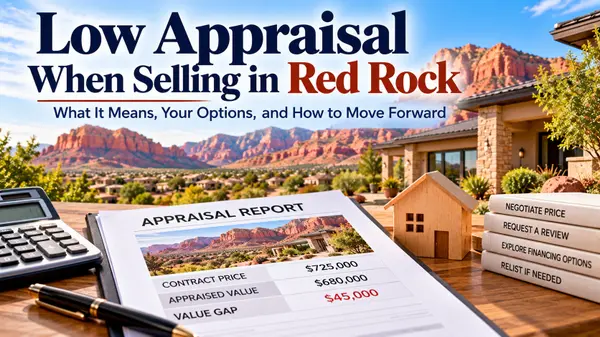

Distressed Property Sales & Foreclosures in St. George
Distressed property sales and foreclosures in St. George can often be addressed before a foreclosure sale occurs, particularly when a homeowner acts early and gathers clear information. Financial hardship, missed payments, a major life transition, or a home needing significant repairs can make selling feel overwhelming. The right next step depends on the loan, timeline, property condition, and the homeowner's goals.
This guide explains common options and places to find help in a practical, non-judgmental way. Every situation is different, but early action generally preserves more choices.
What Makes a Property "Distressed"?
A distressed property is a home affected by financial pressure, physical condition issues, or both. Financial distress can include missed mortgage payments, loan-servicer notices, a reverse-mortgage balance that has become due, or a home entering pre-foreclosure. Physical distress may involve deferred maintenance, storm damage, outdated systems, or repairs that the owner cannot reasonably complete before selling.
A home does not need to be in foreclosure to be considered distressed. A seller may be current on payments yet need a faster sale because of retirement, divorce, an estate transition, or an unexpectedly costly repair. In those cases, the priority is often creating a workable sale plan without adding unnecessary expense or delay.
How Foreclosure Generally Works
Foreclosure generally moves from missed payments to formal notices and, if the default is not resolved, a trustee sale. In Utah, most deed-of-trust foreclosures use a nonjudicial process, which can proceed outside a traditional court case when statutory notice requirements are met.
For a St. George homeowner, the process commonly follows these steps:
- Missed payments and servicer contact: The loan servicer sends delinquency notices and may discuss available loss-mitigation options.
- Notice of default: If the default continues, a notice of default may be recorded. Utah law requires at least three months after recording before a notice of sale may be given.
- Notice of sale: The trustee provides formal notice according to Utah publication and posting requirements and sets a scheduled sale date.
- Trustee sale or resolution: The property proceeds to auction unless the loan is brought current, another lender-approved solution is completed, or a sale closes before the deadline.
Homeowners should review every notice promptly, confirm dates with their loan servicer, and seek legal guidance for questions about their specific rights or deadlines. The Utah Legislature's foreclosure statutes provide the governing framework, though they are not a substitute for legal advice.
Options Before Foreclosure
Homeowners may have several options before a foreclosure sale, and the best fit depends on income, equity, the loan balance, and whether keeping the property remains realistic. A conventional listing generally involves pricing, disclosures, marketing, offer review, and closing coordination.
| Option | May fit when | Main tradeoff | Lender approval needed |
|---|---|---|---|
| Loan modification | Payments may become manageable with changed terms | The loan balance or repayment period may change | Yes |
| Forbearance | Hardship may be temporary | Missed amounts usually still need repayment | Yes |
| Repayment plan | Income has resumed after a short disruption | Monthly payments may be higher during catch-up | Yes |
| Deed in lieu | Keeping or selling the home is not feasible | The lender must agree, and title issues may prevent it | Yes |
| Short sale | Expected proceeds will not cover the debt and closing costs | Approval can take time and requires documentation | Yes |
| Conventional sale | Equity and timing support a normal sale | Requires a realistic price and enough time to close | Usually no |
Before agreeing to any option, homeowners should ask for terms in writing and understand how a proposed arrangement affects the loan balance, credit, taxes, occupancy, and future obligations. A housing counselor, attorney, or tax professional can help evaluate those questions.
Selling During Pre-Foreclosure
Selling during pre-foreclosure is often possible, and starting sooner generally gives the homeowner more control over pricing, preparation, and closing logistics. A pre-foreclosure sale may allow the owner to market the property, evaluate offers, and coordinate payoff details before the scheduled foreclosure sale date.
The key is to work backward from the deadlines in the notices. The loan servicer will need enough time to provide payoff information and process any required approvals, while a buyer will need time for financing, title work, and closing. A realistic pricing strategy matters because an overpriced property can lose valuable time, while a deeply discounted listing may sacrifice equity unnecessarily.
Requesting a current home value estimate can help compare expected sale proceeds with the amount owed. That comparison should also account for liens, closing costs, repairs, and the time remaining before any scheduled sale.
Short Sales Explained
A short sale is a sale in which the lender agrees to accept less than the full loan payoff from the transaction. Unlike foreclosure, a short sale is a negotiated sale initiated while the homeowner still has an opportunity to participate in the marketing and offer process.
Lender approval is central to a short sale. The seller typically provides financial documentation, a hardship explanation, and details about the proposed purchase offer. The lender then reviews the package and decides whether to approve the sale terms. This review can take time, so early preparation is important.
A short sale may be worth considering when the home's expected sale price will not cover the mortgage payoff and normal closing costs. It is not automatically the right answer for every owner, particularly when another workout option or a conventional sale may better fit the household's circumstances. Tax and legal consequences can vary, so qualified advice is important before making a final decision.
Selling As-Is or Quickly
Selling as-is can be a practical option when repairs, cleanup, or updates are not feasible before listing. An as-is sale does not eliminate the need for accurate disclosures, but it can help a seller focus on the property's current condition rather than undertaking projects that may not improve the outcome enough to justify the cost.
Speed should not automatically mean accepting the first offer. A seller can still compare price, financing terms, closing timing, repair requests, and contingencies. For a home needing extensive work, buyers may price in the cost and uncertainty of repairs. For a well-located home with only cosmetic needs, broader exposure may produce stronger interest than a quick off-market solution.
The right approach balances the urgency of the timeline against the equity the seller hopes to preserve. A clear plan for access, disclosures, title issues, and personal-property removal can reduce last-minute complications.
Pricing a Distressed Property
Pricing a distressed property requires an honest view of condition, urgency, and the likely buyer pool. A home with major deferred maintenance may need to be priced differently from a comparable move-in-ready home, while a property facing a tight deadline may need a strategy that encourages timely, qualified offers.
Condition does not always require a steep discount. Some buyers are prepared to take on repairs, especially when the location, lot, layout, or underlying home features remain appealing. The goal is to distinguish between issues that buyers can reasonably address and issues that materially limit financing, insurability, or occupancy.
A pricing discussion should account for the mortgage payoff, estimated closing costs, any liens, and the time available before a foreclosure sale. Sellers should avoid relying solely on an automated estimate because it may not reflect repairs, local buyer demand, or the urgency of a particular transaction.
Buying Distressed Properties
Buying a distressed property can create an opportunity for a buyer who understands the condition, title, financing, and timeline risks involved. These homes may be sold as-is, may require significant repairs, or may involve lender approval that extends the transaction timeline.
Buyers should review property disclosures, investigate title matters, and consider whether their financing can accommodate the property's condition. A low asking price does not necessarily mean a lower overall cost once repairs, holding expenses, insurance, and closing delays are considered.
For sellers, understanding the buyer's perspective can improve negotiations. A well-documented property condition, realistic price, and organized sale timeline can make a distressed listing easier for qualified buyers to evaluate.
Where to Get Help
Free, qualified housing counseling is available for homeowners facing mortgage-payment difficulties or foreclosure risk. The U.S. Department of Housing and Urban Development states that HUD-approved counseling agencies can help homeowners understand options, organize finances, and communicate with lenders. Homeowners can use HUD's foreclosure-help resources or call HUD's housing-counseling locator at 800-569-4287.
A real estate attorney can explain legal notices, title concerns, estate-related ownership questions, divorce-related sale issues, and other legal matters. A tax professional can help a homeowner understand potential tax consequences before completing a short sale, deed in lieu, or other transaction.
For St. George properties, the Washington County Recorder/Surveyor office provides property-search and recorded-document resources that can help homeowners identify ownership records and other documents relevant to a sale. County records do not replace legal or title advice, but reviewing them early can help clarify what needs to be addressed before closing.
Be cautious with anyone who demands an upfront fee, guarantees a specific outcome, or urges you to stop communicating with your loan servicer. Reliable help should make the situation clearer, not more confusing.
Explore Your St. George Selling Options
Distressed property sales and foreclosures in St. George are easier to navigate when homeowners act before deadlines narrow their choices. Whether the best path is a conventional sale, an as-is listing, a short sale, or another solution, timely information and qualified guidance can help protect your equity and options during a difficult transition.
Bryan Knudson works with St. George homeowners to review property values, timelines, and practical sale strategies with discretion. To discuss your situation confidentially, call Sell Dixie at +1 (435) 632-2349 or reach out through the Sell Dixie contact page.
FAQ
Can I sell my house if I'm behind on payments?
Selling may still be possible after missed mortgage payments, provided the foreclosure sale has not occurred and there is enough time to complete the transaction. The proceeds generally need to cover the payoff and related obligations unless the lender agrees to another arrangement.
What is the difference between a short sale and foreclosure?
In a short sale, the lender reviews and approves a negotiated transaction for less than the full debt, while foreclosure is the lender's process for taking and selling the property after default. A short sale gives the homeowner more involvement in marketing and offer decisions.
How long does foreclosure take in Utah?
The length of foreclosure depends on the loan, required notices, lender actions, and Utah's nonjudicial process, which includes a minimum three-month period after a notice of default is recorded before a notice of sale is issued. Reading every notice promptly is important because its deadlines affect the remaining options and timing of a potential sale.
Where can I get free foreclosure help?
Eligible homeowners can receive no-cost foreclosure-prevention assistance from HUD-approved housing counseling agencies. A counselor may help organize documents, discuss potential workout paths, and prepare for conversations with the loan servicer.
Categories
Recent Posts